

Rafale
 Ukrainian President Volodymyr Zelensky and his French counterpart Emmanuel Macron n 17 November 20225 signed a letter of intent on Monday for Kyiv to acquire up to 100 Rafale warplanes and new air-defence systems to strengthen its long-term war effort. Zelensky's visit to Paris comes as Russian drone and missile strikes intensify and Moscow claims frontline gains. Zelensky said Kyiv may consider co-production of Rafale warplanes in the future. Macron said the accord signed at France's Villacoublay air base would bolster Ukraine's defences in the face of "unacceptable attacks by Russia" and what he described as Moscow's "addiction to war". The letter of intent is not a purchase and sales contract and is projected to be realised "over a timeframe of about 10 years", said Macron's office.
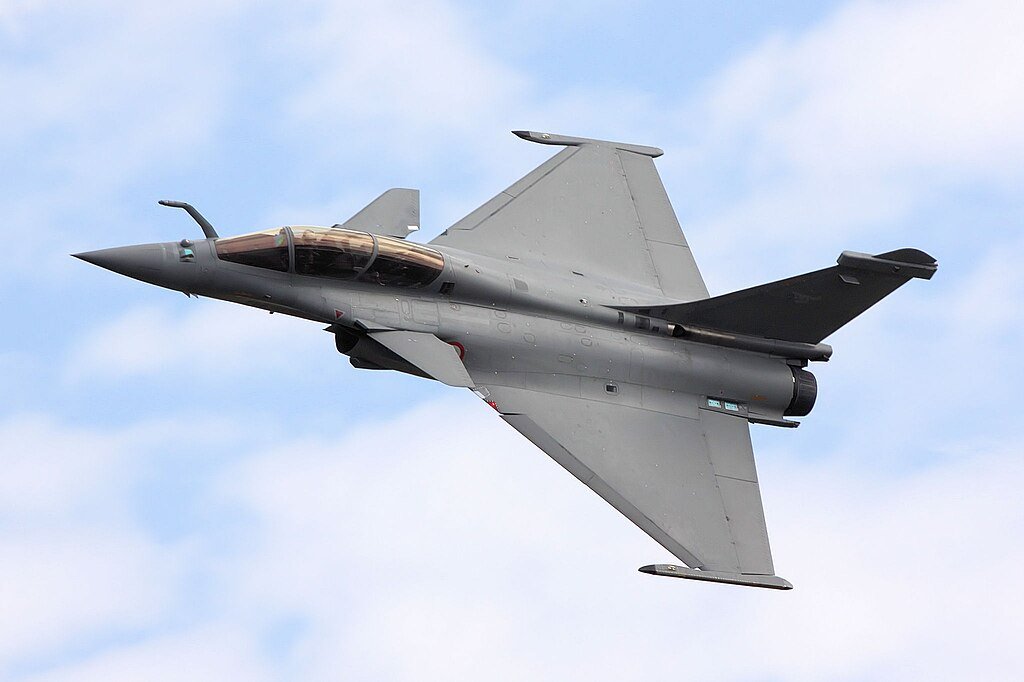
Ukraine actively pursued the acquisition of French-made Dassault Rafale fighter jets as part of a broader effort to rebuild and modernize its air force amid the ongoing war with Russia. On October 28, 2025, Ukrainian President Volodymyr Zelenskyy publicly confirmed that negotiations were underway with France for the potential purchase of Rafales, alongside other platforms like U.S. F-16s and Swedish Gripens. He stated that Ukraine needs around 250 new combat aircraft in total to replace its aging Soviet-era fleet, describing the strategy as a "three-platform" approach involving these jets.
Zelenskyy highlighted the Rafale's appeal as an "ITAR-free" option (not subject to U.S. International Traffic in Arms Regulations), which could allow quicker integration without potential U.S. vetoes on components, unlike some alternatives. Dassault Aviation, the manufacturer, has expressed readiness to supply the jets if Kyiv formally requests them. According to reports from October 30, 2025, talks were ongoing, but details on the negotiation stage, delivery timelines, or quantities remain undisclosed.
Current contracts suggest new Rafales for France will be delivered over 2027-2032. That limits how many could be diverted or provided to Ukraine in the short term. Medium-term (2-5 years) is more plausible. If contracts were negotiated, and supply chains/training were set up, Ukraine could begin receiving Rafales in the mid-to-late 2020s. Indeed, one source states the idea is a “medium-term prospect” not a near-term game changer.
Conditions for a faster timeline: A major policy shift by France (or a new production surge dedicated to Ukraine), accelerated pilot training in Ukraine, and the weapons/logistics chain being set up. Without those, delays were inevitable.
A source close to Dassault confirmed the company's preparedness, emphasizing that final approval would likely require French President Emmanuel Macron's sign-off. France had already provided Ukraine with Mirage 2000-5 jets and pledged more, but the Rafale represents a more advanced, multirole fighter capable of air-to-air combat, ground strikes, and carrying a wide range of Western munitions.
This development came as Ukraine sought to diversify its sources of military aid and reduce dependency on systems with restrictive export controls. Some analysts note that funding for such acquisitions could partly come from frozen Russian assets in Europe, potentially making Russia "pay" for Ukraine's rearmament.
For Ukraine to operate Rafales they would need training for pilots and ground crew, logistics, supply of parts and maintenance, and suitable weapons/munitions and support infrastructure. Challenges include high costs, pilot training (estimated at six months for similar jets like the Gripen), and integration into Ukraine's logistics.
No deal had been finalized, and while enthusiasm is high in Ukrainian circles, critics point out that earlier deliveries of advanced jets like the Rafale could have been expedited. Recent discussions on X (formerly Twitter) reflect similar sentiments, with users sharing news of the talks and debating the strategic value of Rafales versus other options like Gripens, which were seen as more cost-effective and runway-flexible. For instance, posts from October 30, 2025, highlight Dassault's conditional readiness and Zelenskyy's push for a multi-jet fleet.
France’s Defence Minister Sébastien Lecornu had opposed the transfer of second-hand Rafales to Ukraine, saying it could undermine France’s own combat capability. Officially, Rafales had not been committed to Ukraine as part of the current military-aid package. Instead, France committed to transfer older jets: Mirage 2000-5F aircraft to Ukraine. France’s Rafale production lines were busy serving both domestic needs and export contracts. Diverting jets to Ukraine would impact France’s own force readiness. France is keeping its Rafale force target at 225 aircraft, and production is busy with export and domestic orders—important constraints on near-term availability.

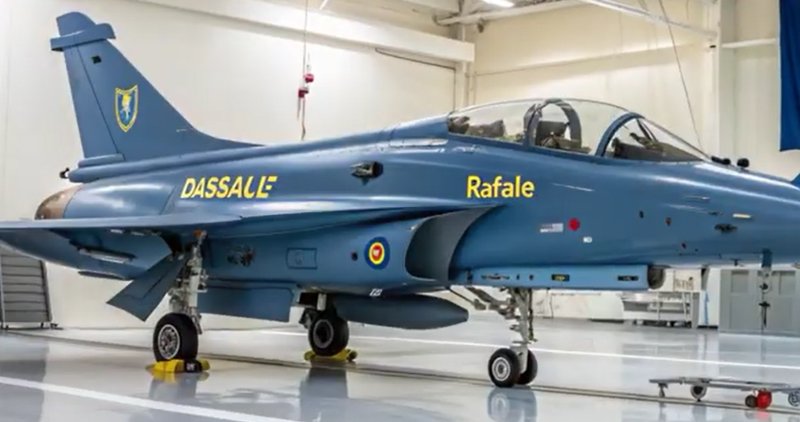
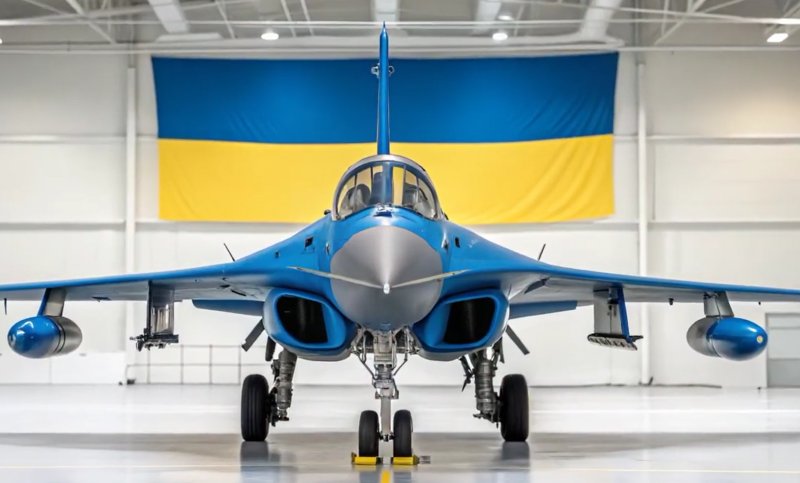
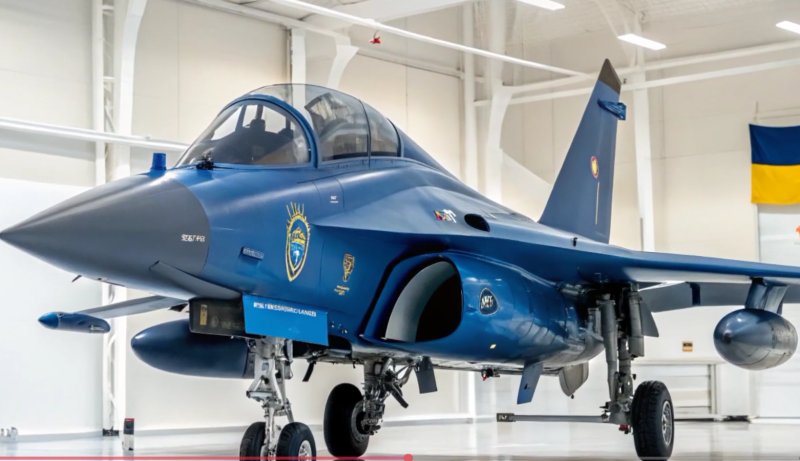
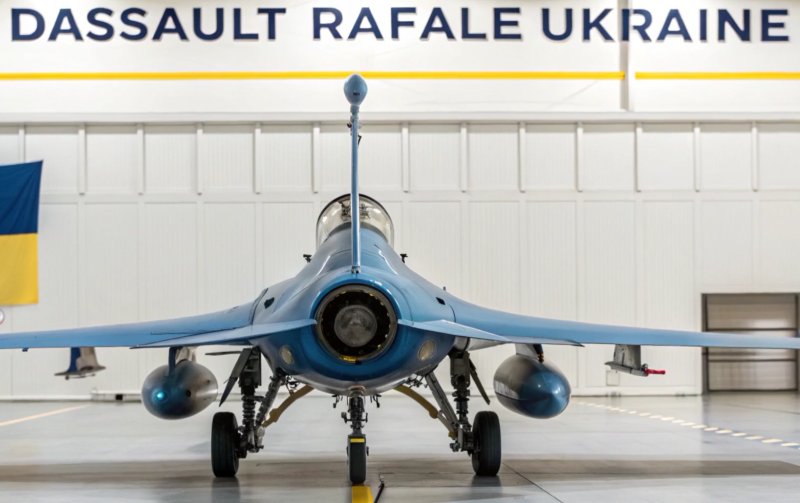
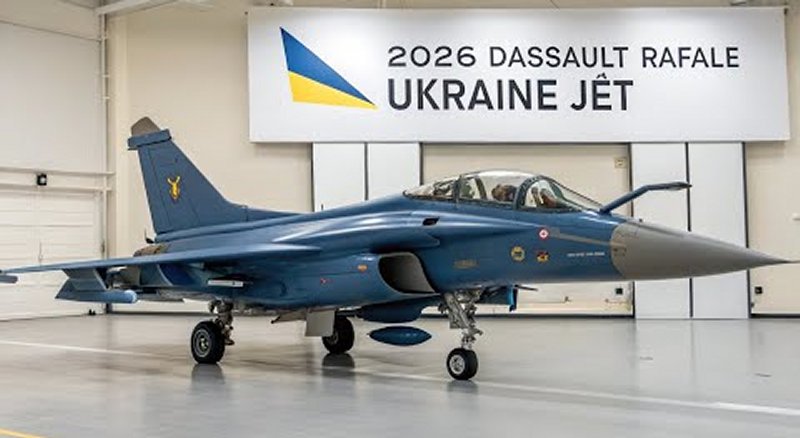


The Vision of the Air Force of the Armed Forces of Ukraine - 2035, was adopted in May 2020. The strategic document was developed on the basis of the Vision of the Armed Forces of Ukraine and aims to determine the rational ways of developing military aviation until 2035. A contract for the purchase of a multi-purpose fighter would be signed for a limited supply in the total number of up to 6-12 units. to begin in 2023-2025 for the start of experimental operation, By 2030, at least two tactical aviation brigades must be fully re-equipped with new aircraft and acquire full combat operational capabilities. The F-16 and JAS-39 are light single-engine fighters similar in class to the MiG-29, and the Rafale and F/A-18 are heavy multipurpose fighters with two engines.
The French publication Intelligence Online reported in April 2021 that the French aerospace giant Dassault Aviation would offer the Rafale multirole fighter. Andrii Lavreniuk reported "The fact that Intelligence Online, whose publications are mostly available by subscription, made the material about French aviation ambitions in Ukraine public, only shows that official Paris is interested in such public publicity." The Rafale, whose cost can range from 150 to 260 million euros, is the most expensive fighter in Europe and the world in its heavy class.
The French government was said to be ready to guarantee Ukraine a loan of 1.5 billion euros for the Rafale purchase, which would provide financial coverage of 85% of the contract value. Lavreniuk reported "Ukraine can order about 45 new Rafale fighters from France (this is if the cost is not more than 150 million euros per unit). At the same time, the strategic vision of the Air Force Command of the Armed Forces of Ukraine envisages the presence in 2035 of four tactical aviation brigades, armed with 72-108 generation 4++ aircraft." [but 1.5 billion euros only buys 10 fighters at 150 million euro apiecce].
The aircraft has a complicated export history. Initially, it was in service with Egypt, Qatar, India and Greece.
Ukrainian Foreign Minister Dmytro Kuleba has noted that even after the long-awaited agreement by allies to send Ukraine F-16 fighters, Kyiv remains interested in other aircraft models. Kuleba mentioned in an interview 31 August 2023 with the French Le Monde that Ukraine "will not limit its ambitions to obtaining F-16s." "We are working with other countries that produce the latest generation of aircraft," the Foreign Minister stated. He also emphasised the strategic advantages for France in terms of future investments from potentially supplying Ukraine with Rafale fighters.
Rafale (French:lit. "squall") is a fourth-generation French multipurpose fighter developed by the French company Dassault Aviation[6]. It made its first flight in July 1986. Adopted by the French Navy and Air Force in 2004 (Navy) and 2006 (Air Force), respectively.
The Dassault Rafale is a French twin-engine multi-role fighter plane with delta wings. Construction of the Rafale was initiated in 1980 by Dassault as an experimental combat aircraft - the ACX. It was to replace the tactical battlefield aircraft of the French air force Jaguar and the French navy Vouhgt F-8E and Dassault Super Etendard. Rafale A, powered by two General Electric F104 turbofan engines, left the assembly line on December 14, 1985, and exceeded the speed of sound in its first flight on July 4, 1986. In April 1987, the plane made several approaches to the aircraft carrier Clemenceau to mark an operation from the deck. In April 1989, the new SNECMA M88-2 engine was introduced, which became the basic power unit. The flight of the aircraft in this configuration took place on February 27, 1990.
Given constraints, any Rafale delivery is more likely to be a medium-term option rather than a near-term game changer. Adding Rafales would significantly boost Ukraine’s combat aircraft modernization—making their air force more aligned to Western standards and less dependent on older Soviet-era jets. It would send a strong political signal of further Western commitment. Operationally, it could shift the balance in terms of air-capability (but only if logistics/training/support issues were resolved). For France, it meant balancing support to Ukraine with sustaining its own national defence needs (21 Rafales delivered in 2024; line is near capacity), and managing its export commitments.
Under one scenario, new-build Rafales (most realistic) woul form an initial tranche of 12–24 aircraft (one squadron plus spares/training capacity). This scale matches typical first-lot export patterns (e.g., Greece 18+6=24; Croatia 12 used; Indonesia 42 in batches) and what training/maintenance ecosystems can absorb quickly. Delivery window at the earliest wouod be late-2020s (think ~2028–2030+) given the current order book and France’s production pacing. The standard/variant would be Rafale F4.x (single-seat “C” + a few twin-seat “B” airframes for conversion/training). F4.x brings upgrades in connectivity, EW (SPECTRA), and MICA NG integration as it enters service.
Under another scenario, of former French inventory (used) F3R (low probability as of 2025), 12–18 would be the natural “one-squadron” size if Paris changed policy. The defense minister had opposed drawing down frontline Rafales; France is already backfilling Mirage transfers and guarding its 225-jet target.
The likely weapons & kits with Rafale
- Air-to-air: Meteor and MICA (then MICA NG as it fields)—native, already cleared on Rafale.
- Air-to-ground: AASM/HAMMER guided bombs; SCALP-EG/Storm Shadow (already used by Ukraine from other platforms), both native to Rafale.
- Standard package expectation: For a 12–24 jet buy, an initial stock of AAMs (Meteor/MICA), AASM kits, and limited SCALP plus training, spares, and 2-3 years of logistics support—mirrors recent Rafale export packages.
Recent export benchmarks show first lots of 12–24 were typical and absorbable for training/logistics (e.g., Greece 24 total, Croatia 12 used, Indonesia 42 in batches). Per-aircraft “program” price points in those deals help anchor cost bands.
Munitions & mission kits (initial 24–36 months)
- Air-to-air Meteor BVRAAM: 60 rounds (3–4 per jet in ready stock); widely cited unit cost order-of-magnitude €2M (varies by lot).
- Air-to-air Meteor MICA / MICA-NG: 120 rounds (mix IR/RF; ~6–8 per jet on hand). (Cost varies; use framework pricing in overall contingency.)(60 × ~€2.0M): ~€120M. MICA / MICA-NG: hold €150–€250M placeholder (mix & quantity-dependent, classified pricing).
- Air-to-surface AASM/HAMMER (250 kg): 600 kits (initial), scalable—France already accelerating AASM production for Ukraine; historical unit-cost references range €164k–~€300k depending on version and accounting. (600 × €0.16–0.30M): €96–€180M.
- Air-to-surface SCALP-EG: 50 missiles to seed a deep-strike magazine; IFRI-quoted French unit price ˜€850k (stock-dependent). (50 × ~€0.85M): €42.5M.
- Targeting/recce pods, DASS/SPECTRA support, EW expendables, drop tanks, starter spares, AGE (ground equipment), and full mission simulators (2 bays minimum).
Weapons subtotal (planning): €410–€590M (˜ $440–$640M). (All weapons were native on Rafale; Meteor/MICA for A2A, AASM/SCALP for strike. Ukraine already operates SCALP/Storm Shadow from other platforms.)
Basing would require 1 main operating base + 1 dispersal site hardened for quick-turn ops, weapons storage, and climate-controlled avionics bays. Sustainment profile would include CLS (contractor logistics support) for years 1–3, transitioning to hybrid MIL/industry with deeper-level work in-EU. Spares & rotables would target 85–90% mission-capable rate under surge; set initial provisioning to 24 months. Weapons pipeline would establish recurring AASM resupply (France has publicly moved to ramp production), plus mixed-source SCALP refurbishment/new-build flow.
Using recent deals for bounds, Indonesia 42 new-build ˜ $8.1B total (program content implies ~$190M/aircraft all-in with training, support, some weapons). Greece 6 new-build add-on €1.09B (~€182M/aircraft, airframes/support slice). Croatia 12 used F3R ˜€999M (package incl. training/support). Ukraine's planning range for airframes & setup (18 jets) could be $3.0–$3.8B for 18 new-build F4.x with training, sims, spares, pods, and initial support (weapons excluded). This brackets between Croatia’s used package and Indonesia’s rich new-build content, scaled to 18.
Phasing would stand-up ~24 combat-ready pilots (1.3× airframes) via a 2-phase pipeline: (1) LIFT/ground school + sim, (2) OCU on Rafale B/C in France, then progression in-theater. (As a reference point, France publicly scoped 5–6 months to convert Mirage pilots; Rafale conversion will be longer/more intensive.) Ground crew would be ~6–8 maintainers per jet (split across airframe, avionics, engines, armament, and line/squadron support), plus depot-level contracted support during the first 24–36 months. Embedded training would keep 6–8 jets in France for the first 6–9 months for concentrated OCU/simulator work—mirroring how Greece kept its first Rafales in France before home basing.
Phasing plan (fastest credible path)
- Q1–Q2 2026: Framework MoU; lock mission set & weapons; long-lead funding.
- 2026–2027: Pilot/maintainer cohorts begin in France; sims/pods ordered; base works start. (France previously kept partner jets in-country for training before ferry—playbook exists.)
- 2028: First 6–8 jets deliver; OCU in France continues; IOC with A2A + AASM.
- 2029–2030+: Remaining jets; integrate Meteor at scale, grow SCALP stock; FOC with two operational squadrons.
Option A — 12-Jet Starter Squadron (Rafale F4.x) (best-case if contract in 2026)
- 2026 H1–H2: Contract; long-lead funding; training MoUs.
- 2027: Pilot/maintainer cohorts in France; base-works; sims on order.
- 2028 H2: First 4–6 B/C delivered to France for OCU; initial A2A readiness.
- 2029: Ferry to Ukraine; IOC (12 jets) with A2A + AASM; limited SCALP.
- 2030: Sustainment steady state; expand weapons stocks.
Option B — 24-Jet Two-Squadron Build (Rafale F4.x) (best-case if contract in 2026)
- 2026 H1–H2: Contract; long-lead buys (airframes/engines/avionics/munitions).
- 2027: Dual-stream training in France; base-works for 2 operating locations.
- 2028 H2: First 8 jets to France for OCU; weapons initial delivery.
- 2029: IOC (12 jets) at Home Base A; A2A + AASM ready; limited SCALP.
- 2030–2031: Second tranche deliveries; FOC (~24 jets) across Base A + dispersal.
Production capacity / slotting could mitigate via EU financing and multiyear block buy to secure Dassault/Mbda slots (France/EU already pushing industry to ramp output). Fleet drawdown politics (France) could kKeep plan new-build focused (Paris is reluctant to part with in-service Rafales). Training throughput could use twin-seat Bs, extra sim bays, and contract instructor cadre in France for the first 18–24 months. Weapons resupply could tie AASM & SCALP to active ramp programs and EU co-funding; pre-fund framework lots. Grand total planning figure (Phase 1, 18 jets + starter weapons): ~$3.5–$4.4B. Scaling to 24 jets: add ~$0.6–$0.9B for airframes/support + proportional munitions uplift. Dassault reported 21 Rafale deliveries in 2024 and guidance for ~25 in 2025 amid a large export backlog—slotting a new Ukraine line item takes time.
|
NEWSLETTER
|
| Join the GlobalSecurity.org mailing list |
|
|
|
