

Lawful Order
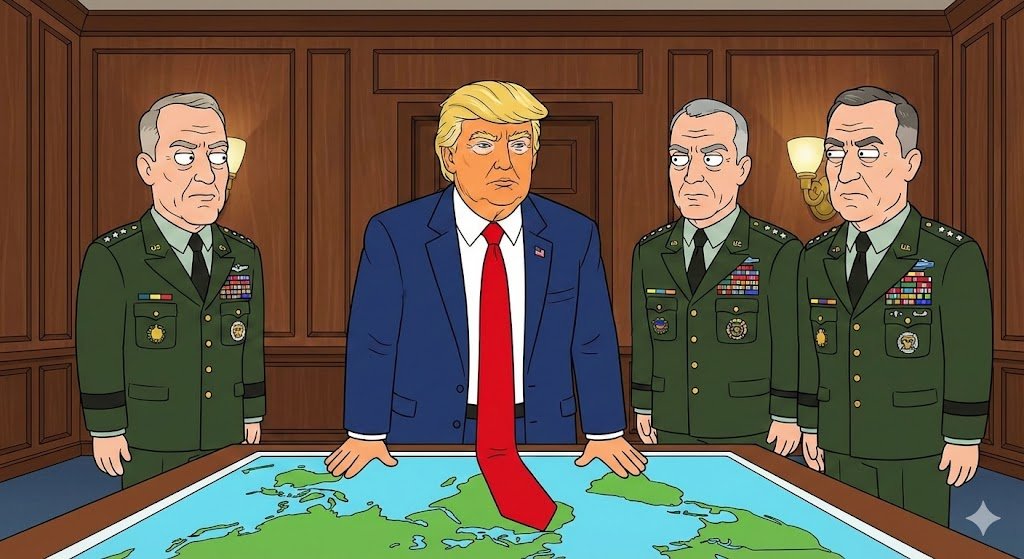 A fundamental principle is that military personnel are obligated to disobey an order they know to be illegal or immoral (e.g., an order to commit a crime or an act of brutality). The order must serve a legitimate governmental or military interest, such as maintaining the morale, welfare, and safety of the unit or ensuring an accused's presence at trial.
All military members are subject to lawful orders. A military member is subject to prosecution under the Uniform Code of Military Justice for violation of Article 92, Failure to Obey a Lawful Order. A duty may be imposed on an officer or enlisted member by treaty, statute, regulation, lawful order, standard operating procedure or custom of the service. This Instruction is a lawful regulation and creates the basis for a military duty. An officer or enlisted member who knew or reasonably should have known of a duty or who performs a duty in a culpably inefficient manner may be held accountable under Article 92, Uniform Code of Military Justice, for failure to perform his or her duties.
The Nuremberg trials — particularly the tribunal held immediately following World War II from November 1945 until October 1946 — were one of the most critical events in modern international law. The general rule prior to Nuremberg was that combatants could not be punished for offenses committed under the orders or sanction of their government or commanders. The United States did not remove superior orders as a complete legal defense until November 1944. Even then, the American view was that if the crime committed violated “the accepted laws and customs of war,” the defense of superior orders could be considered in determining culpability, either as a matter in defense or in mitigation in punishment. The defense of “I was just following orders” would forever be viewed as unsatisfactory and linked to the Nuremberg trials.
The Uniform Code of Military Justice (UCMJ) itself does not explicitly provide a single, detailed definition of "lawful order," but the principles of what constitutes a lawful order are well-established through military law, case law, and the Manual for Courts-Martial (MCM). An order is lawful unless it is contrary to the U.S. Constitution, the laws of the United States, or lawful superior orders. Orders are generally presumed to be lawful, and a service member disobeys them at their own peril. The burden of proof to rebut this presumption generally falls on the defense in a court-martial proceeding. Crucially, service members have an affirmative duty to disobey a patently illegal or immoral order, such as one that directs the commission of a crime, an act of brutality, or a violation of statutory or constitutional rights. Obeying such an order does not provide a valid defense and can result in criminal liability.
The Military Law Task Force of the National Lawyers Guild notes "The only way to find out whether an order is legal or illegal is to obey, or refuse to obey, and see what is decided after the fact by a military court, a civilian court reviewing a military decision, or a war crimes or human rights tribunal. As a servicemenber subject to the UCMJ, you obey or disobey any order at your peril – which is, of course, one of the risks of enlistment. You can consult a civilian lawyer with expertise in military and international law, but they are very unlikely to be able to give you a definitive answer as to whether a particular order is likely to be found to be legal or illegal."
|
NEWSLETTER
|
| Join the GlobalSecurity.org mailing list |
|
|
|
