

Brian J. Cole
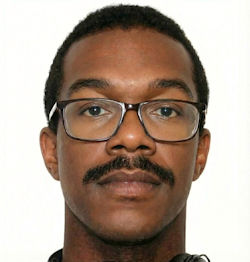 Brian J. Cole, Jr., 30, of Woodbridge, Virginia, was arrested December 4, 2025 and charged for transporting and planting two improvised explosive devices (IEDs) on January 5, 2021, at the headquarters of both the Republican National Committee and the Democratic National Committee in Washington DC, announced U.S. Attorney Jeanine Ferris Pirro.
The Associated Press reports that, according to sources familiar with the investigation, Cole expressed beliefs that the 2020 election was stolen and voiced support for Donald Trump. That points to a pro-Trump / “Stop the Steal” grievance worldview, which is more specific than “extremist” and doesn’t require guessing what umbrella label the source intended.
TIME reports that two people familiar with the matter described his political beliefs as “extremist” (attributed via The Washington Post in TIME’s write-up). In the public accounts, “extremist” is not spelled out (violent vs nonviolent, anti-government vs other, etc.), so it’s more of a descriptor than a specific ideological orientation. TIME also reports that another outlet (MS Now), citing two people briefed on the matter, said he was tied to statements supporting anarchist ideology. What’s missing publicly: the content of those statements, when/where they were made, and whether “anarchist” is being used in a precise political-theory sense or as a looser “anti-authority” shorthand.
Reports indicated that sources familiar with the investigation described Cole’s political beliefs as "extremist" and linked him to statements supporting "anarchist" ideology, though the public record had not detailed the underlying material. While a full manifesto has not been released to the public, the description of Cole’s ideology comes from federal law enforcement officials speaking to major news outlets on the condition of anonymity. MS NOW (citing "two people briefed on the matter") and The Washington Post (citing "sources familiar with the investigation") reported 04 December 2025.
Investigators had not identified a singular, specific motive (such as stopping the certification of the election specifically for Donald Trump). Instead, sources state Cole has been "tied to statements supporting anarchist ideology." Other sources described his political leanings more broadly as "extremist" — a term often used by the DOJ to describe anti-government or anti-authority violent extremism (illegally motivated violence, regardless of left/right alignment).
This distinction is critical because it challenged the prevailing public theory that the pipe bomber was necessarily a hardcore partisan loyalist. Anarchist ideology in this context typically implies a desire to disrupt both political systems, which aligns with his choice of targets: both the RNC (Republican) and DNC (Democratic) headquarters were targeted simultaneously.
Here is a real communications problem: “anarchist” is a political term with actual meaning, but in mass discourse it often gets used as a vibes-based synonym for “violent chaos,” and then it gets welded (often unfairly) to whatever cultural villain word is trending (e.g., “antifa,” “trans ___”). At its core, anarchism is a cluster of political philosophies skeptical of coercive hierarchy (especially the state) and interested in voluntary association, mutual aid, worker control, etc. There are Nonviolent / organizing traditions (labor, mutual aid, anti-authoritarian community organizing), and Insurrectionary / militant currents (some of which advocate sabotage or violence). So “anarchist” by itself does not equal “violent,” and it definitely doesn’t equal “terrorist.”
“Antifa” is not one ideology; it’s a loose label for anti-fascist activity, ranging from peaceful counter-protests to street confrontations. Participants can be liberals, socialists, anarchists, etc. A visible subset of activists in protests have been black bloc, an anonymity tactic historically associated with some anarchist milieus—so the public collapses “black clothing at protests” ? “antifa” ? “anarchist” ? “violent.” That chain is mostly inference, not precision. “Transtifa” is essentially a meme/pejorative, not a real organization. It functions rhetorically to fuse two stigmas: “Antifa” as “public enemy”; transgender identity as “other” …and turn them into a single bogeyman. It’s an example of how identity rumors get attached to political rumors to make them stick.
In breaking-news cases, platforms often generate low-evidence identity rumors (including “they’re trans”) because it’s rage-bait and spreads fast, such “people are saying” accounts monetize outrage. The reliable signal is: does any reputable outlet attribute it to named sources, court records, or the person themselves? There was no credible reporting that anyone has suggested he is transgender. A recent profile-style piece (Fox News) describes him as a 30-year-old man and focused on arrest/case details, with no mention of transgender identity or anything similar. Even more sensational/tabloid coverage circulating right now (NY Post) is packed with angles and controversy, but the coveaged did’t raise “transgender” as a claim about him.
Cole, age 30 years at the time of the arrest, raduated from Hylton High School in 2013. He lived with his parents in a suburban cul-de-sac in Woodbridge, Virginia (approx. 25 miles south of Washington, DC). He was described by neighbors as "quiet," "antisocial," and "reserved." Cole worked in a bail bondsman's office in Northern Virginia, and had no prior criminal record, only minor traffic violations.
Good-faith criticisms of the Cole investigation mostly cluster around time-to-solve, transparency, and evidentiary clarity. The case was publicly unsolved for almost five years, and the government’s own framing invites the “why now?” question: Reuters reports Attorney General Pam Bondi said “no new evidence” prompted the arrest, instead crediting “a re-evaluation of existing materials.”
That naturally fuels concerns about resourcing, prioritization, analytic rigor, and whether earlier investigative triage missed patterns that were sitting in plain sight. Relatedly, even with an arrest, there’s still a public-information gap: Reuters and AP both note authorities have not publicly laid out a motive or a confirmed operational link between Cole and the January 6 riot (despite the bombs’ obvious diversionary impact), leaving the public to fill the vacuum with speculation.
On the civil-liberties side, the affidavit-level description of how he was identified—AP says it involved “credit card records, cellphone data, and license plate readers”—can trigger legitimate debate about the scope and safeguards around location tracking and mass-surveillance-adjacent tools, even if used lawfully in this case.
Finally, AP’s report that Cole “confessed to planting the bombs” is powerful but also predictably contested in high-profile cases: good-faith critics will want to see the conditions, recordings, counsel access, and corroboration before they treat “confession” as the whole story rather than one component of proof.
AThe partisan controversies are louder, more narrative-driven, and often less tethered to primary documentation—but they matter because they shape public trust. One big thread is “slow-walk vs. breakthrough” blame assignment: Reuters notes the case became “a focus of conspiracy theories,” and partisan commentators have used the timing of the arrest to argue their preferred culprit institution or administration either bungled or suppressed the investigation.
That dynamic has been amplified by on-the-record political media figures: the New York Post quotes FBI Director Kash Patel accusing prior leadership of “sheer incompetence or complete intentional negligence,” which is a very partisan-coded framing and instantly turns an investigative timeline into an administration-versus-administration fight.
A second partisan track is media-framing grievance, where an error becomes evidence of systemic bias: the New York Post reports CNN’s Jake Tapper was criticized after he mistakenly referred to Cole as “a white man” during a segment.
Even though that’s a broadcast mistake rather than evidence about the bombs, it becomes rhetorical ammunition—either to claim mainstream outlets are reckless and agenda-driven, or (from the other side) to claim partisan outlets are exploiting a slip to distract from substance.
A third thread is the broader culture-war habit of stapling simplistic labels (“anarchist,” “extremist,” “antifa,” etc.) onto the suspect without showing underlying speech/acts—something that thrives especially when officials haven’t publicly provided a motive narrative. In that environment, the partisan incentive is to foreground whichever label best fits a preexisting storyline, while downplaying the details that complicate it (like AP’s reporting that Cole expressed “stolen election” beliefs and support for Trump).
This arrest closed a major gap in the investigation of the events surrounding January 6, 2021. For nearly five years, the identity of the "pipe bomber" was one of the most prominent unsolved mysteries of that day. Justice Department officials stated that the case was solved by applying new analytical resources to evidence that had been in the FBI's possession for years.
Cole is charged in a complaint with transporting an explosive device in interstate commerce with the intent to kill, injure, or intimidate any individual or unlawfully to damage or destroy any building, vehicle, or other real or personal property. He is also charged with attempted malicious destruction by means of fire and explosive materials.
According to the complaint, during 2019 and 2020, Cole purchased multiple components consistent with those used to manufacture the two IEDs at several retailers in northern Virginia.
At approximately 1 p.m. on Jan. 6, 2021, multiple law enforcement agencies received reports of a suspected IEDs near the headquarters of the RNC in Washington, D.C. About 1:15 p.m. the same day, a second suspected IED was reported just a few blocks away near the headquarters of the DNC.
The Hazardous Devices Section of the United States Capitol Police (USCP) neutralized both devices. Subsequently, the FBI assessed that the two devices contained a main explosive charge, a fuzing system, and a container.
Video surveillance determined that the same individual placed the devices on the evening of January 5, 2021. The suspect had been wearing dark pants, a grey hooded sweatshirt, dark gloves, Nike Air Max Speed Turf shoes, and a facemask that obscured the person’s face. The video showed the individual adjusting eyeglasses and carrying a backpack.
On January 5, 2021, about 7:10 p.m., Cole’s Nissan Sentra was observed driving past a License Plate Reader at the South Capitol Street exit from I-395 South, which is less than one-half mile from the location where the individual who placed the devices was first observed on foot near North Carolina and New Jersey Avenues, Southeast.
Cell phone records further show that Cole’s cell phone communicated with cell towers in the area of the RNC and DNC on January 5, 2021, between 7:39 p.m. and 8:24 p.m. The FBI’s Cellular Analysis and Survey Team determined that the location of Cole’s cell phone during this period corresponded with the path of the suspect identified by the FBI through analysis of video from that day.
Joining in the announcement were U.S. Attorney General Pamela Bondi, FBI Director Kash Patel, FBI Deputy Director Dan Bongino, FBI Assistant Director in Charge Darren B. Cox of the Washington Field Office, and Chief Pamela A. Smith of the Metropolitan Police Department.
“The well-being of our society rests on our ability as law enforcement to safeguard our citizens,” said U.S. Attorney Pirro. “When bad actors intervene to disrupt and threat that peace – to destroy the very fabric of our country – we must, we do, and we will track them down and hold them to account for their crimes to the full extent of the law. FBI and members of my office worked around the clock to methodically piece together the clues that ultimately identified the defendant.”
“Today’s arrest was the result of good, diligent police work and collaboration on a case that languished for four years under the prior administration,” said Attorney General Bondi. “The American people are safer thanks to this morning’s successful operation.”
“The investigation into the pipe bombs in Washington, D.C. has been a high priority since Deputy Director Bongino and I assumed our roles nine months ago. Since that time, our FBI teams have gone back over every fact and every data point looking for new leads – and today’s arrest is the result of that outstanding work,” said FBI Director Patel. “Although almost five years have passed, this shows the FBI will never rest in bringing justice to those who endanger American lives and our communities. I would like to thank our Washington Field Office, FBI personnel across the country, and our partners for their hard work and dedication which led to this arrest.”
“This historic arrest shows this FBI delivers on its promises to protect the American people,” said FBI Deputy Director Bongino. “The pipe bombs could have caused devastating loss of life and injuries, as well as property damage. I want to thank the FBI employees who worked on this over the years, our law enforcement partners who assisted in the investigation, and the American people for the tips they shared with us.”
"Today's actions underscore the long memory and reach of the FBI," said FBI’s Cox, the Assistant Director in Charge of the Washington Field Office. "The FBI and our partners do not forget. We do not give up. We do not relent. For nearly five years, the investigative team combed through a massive amount of data and leads to identify the suspect arrested today."
This investigation was conducted by the FBI Washington Field Office, the U.S. Capitol Police, the Bureau of Alcohol, Tobacco, Firearms and Explosives, the Metropolitan Police Department, and the U.S. Attorney’s Office for the District of Columbia. It is being prosecuted by the U.S. Attorney’s Office for the District of Columbia.
|
NEWSLETTER
|
| Join the GlobalSecurity.org mailing list |
|
|
|
